
Pressure wave therapy is a modern and highly effective treatment method: Strong energy pulses are applied to the painful areas of the body. These pulses create micro-cavitation bubbles that expand and burst. The force created by these bubbles penetrates tissue and stimulates cellular processes in the body that are responsible for bone and connective tissue healing. Pulse wave technology then accelerates the body's healing process by promoting circulation and improving metabolism. This encourages the body's natural processes to regenerate damaged tissue. Pulse wave technology has been shown most effective in cases where the human body has not been able to heal itself on its own.
How is Treatment Performed?
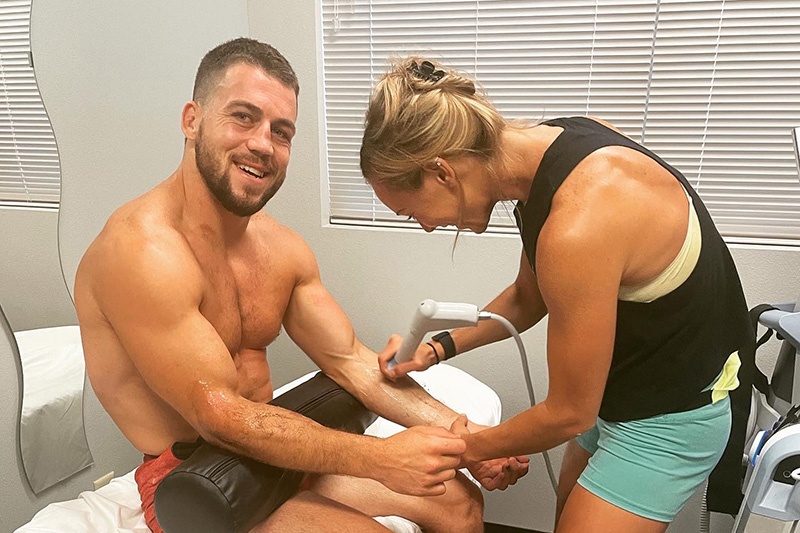
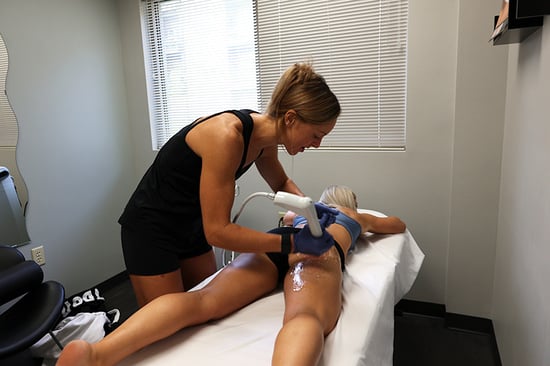
Pressure Wave treatment is noninvasive. Gel is applied to the treatment area; pressure waves are then released through the applicator head as it is moved over the treatment area. Treatment time varies depending on the area and condition being treated. Treatments are prescribed by our Medical Director.
What does Pulse Wave Therapy Feel Like?
The pressure and sensation felt during treatment will vary depending on the intensity of the treatment and location of the pain. The pressure waves may feel like a light pulsing tissue massage or a deeper, more intense tissue release. Often clients describe feeling a great localization and reproduction of the precise point causing their pain, and a referral of the trigger point, which releases pain in nearby areas.
How many treatments are generally needed?
The number of treatment sessions needed depends on the condition that is being treated.
With the innovative pulse wave therapy approach, pathological alterations of tendons, ligaments, capsules, muscles and bones can be eliminated systematically.
These include:
- Shoulder pain, e.g. shoulder calcifications
- Tennis and golfer's elbow
- Patellar tendonitis ("jumper's knee")
- Shin pain / tibial stress syndrome
- Achilles tendon pain
- Heel pain
- Chronic neck, shoulder and back pain
- Muscle tension
- Muscular nodules (trigger points)
- Knee osteoarthritis
- Hamstring issues
- Overuse injuries
Want to book a session? Contact us today!
- Share this article: